Thursday, January 18, 2007

Updates on Pilgrim Baptist Church . . .and Pilgrim Baptist Church


Regular readers know that I was deeply grieved last year when Pilgrim Baptist Church, where Thomas Dorsey pioneered what we now call gospel music, was severely damaged in a fire. I'm writing to offer a correction and some updates.

First, the correction: In this post, I wrote that that Pilgrim Baptist Church in Chicago is the church that appears in the movie The Blues Brothers--in the scene where James Brown is the church pastor. That was incorrect. There are actually two different churches, both named Pilgrim and both founded in 1917, and both in Chicago. (That sound you hear is me pounding my head against the keyboard.)

Now, the sad part: That Pilgrim Baptist Church (which was called Triple Rock Church in the film) was damaged in a September 2006 fire. More here and here and here.

Finally, the update: The Chicago Tribune reports that Mayor Daley is helping raise funds toward rebuilding Pilgrim. Um, the first one. (Here's the Sun-Times' story.)

And, a promise: speaking of the Godfather of Soul, I had the pleasure of attending what I didn't realize would be one of his last concerts. Naturally, I took notes, and of course I'll be sharing with you. So, stay tuned . . .or subscribe, and you'll get an e-mail once I've posted my thoughts.

http://www.villaricatourism.com/

Monday, January 15, 2007

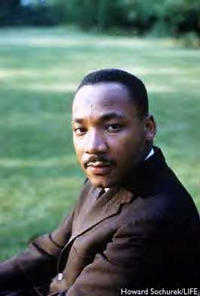
Two Songs for Dr. King


If I Can Help Somebody

If I can help somebody as I pass along
If I can cheer somebody with a word or song
If I can show somebody they're traveling wrong
Then my living shall not be in vain.

If I can do my duty as a Christian ought
If I can bring back beauty to a world up wrought
If I can spread love's message that the Master taught
Then my living shall not be in vain.

Then my living shall not be in vain
If I can help somebody as I pass along
Then my living shall not be in vain.

--a favorite song of Dr. King's, famously recorded by Mahalia Jackson.

***

Tell Him Not to Talk Too Long

If you're around when I meet my day
Don't want a long funeral
And if somebody delivers the eulogy
Tell him not to talk too long.

Just say I tried to feed the hungry
Tried to love somebody
If you're around when I meet my day
Tell him not to talk too long.

Put my casket on an old wagon
Drawn by two fine mule
Bury me in my hometown, Atlanta Georgia
Tell him not to talk too long.

Tell him not to talk too long.

--Mary Lou Williams' 1969 interpretation of a famous speech of Dr. King's. You can hear it on Mary Lou's Mass.

More here on Dr. King and the arts.

image credit: ucr.edu

Happy King Day, friends.

Saturday, January 13, 2007

Hershey's Dark Chocolate Gets Harder to Swallow

In a new commercial for Hershey's Dark Chocolate, people cheerfully unwrap chocolate bars with an especially joyous rendering of "Oh, Happy Day" in the background. If the voiceover is to be believed, we all have a reason to rejoice: Because dark chocolate is high in antioxidants, it's good for us.

Apparently we are to put down the remote and get to singing, swinging, making merry like Christmas and unwrapping healthful, delicious dark chocolate bars as quickly as our greedy little hands allow.

Granted, there are plenty of good things to be said about chocolate. It's good for baking. It smells nice. And dark chocolate is good for you. (But you knew that.) But I've never equated chocolate and religious ecstasy. (That may be because I so rarely have the really good stuff.)

OK, so I'm having a little fun here. But regular readers of this blog know that the use of gospel music in this way troubles me.

Part of it is that I hate hearing music I love used to sell stuff, period. I am not thrilled by the "It's a Wickes House" (Brick House) commercial advertising a local furniture store. I did not approve when "I Feel Good" was used to sell laxatives. (No, Godfather! Please!please!please!) And I regret that I owe my first exposure to the Four Tops' "I Can't Help Myself (Sugarpie Honeybunch)" to a Duncan Hines commercial.

But although each of those songs is meaningful to me and my fellow retro-licious pop culture nerds, not one of them is expressly religious. These aren't songs meant to celebrate God's goodness, to proclaim truths about his work in the world, or to encourage his people in the way "Oh, Happy Day" is. And that particular song is incredibly meaningful. Not only because it revolutionized gospel music, but also because, to me, it's a story of how God can use young people to change the world when no one's looking. It's a song that transcends culture and genre, one that never gets old to me. (Perhaps there's also some irony in being critical of the way a song known for moving outside church walls is, well, being used outside church walls.)

More generally, I'm troubled when I hear gospel music used in commercials (more examples here), because I think it trivializes the music, and, by extension, Christianity as it its practiced by African-Americans. It's another of those instances that makes me pause and consider what this music means in the public imagination. I realize, also, that African-American religion isn't the only form of belief taken less than seriously. Consider the casual use of the word "karma," or the widespread practice of yoga without much regard for its Hindu roots (I've got friends on both sides of that one, but I'm just saying).

It's not as though this is an uncomplicated issue. Gospel music is directly and indirectly involved in the selling of many things. Gospel music, for example. And movies, both decent and not-so-great. People (cough) get paid to write about gospel music. Marketers are realizing that it's just good business to take gospel music and its listeners seriously. There are labels, charts, ratings, etc. that all have do, in some way, with gospel music as a commodity. After all, when you read a gospel music review, the bottom line, nestled somewhere between all of the historical context about this particular subgenre and the literary allusions and the carefully nuanced phrases, crafted just-so, is someone's assessment about whether or not you, Dear Reader, should burn or buy, should pick or pan.

Gospel music is just so inextricably linked to African-American culture--and to African-American religious culture, that its simultaneously visible and invisible in our culture. It's everywhere, from the tragic melisma of American Idol (Ever started a run and realized you couldn't find your way back home? Mmm-hmmm. You know who you are.) to the hair-raising testimonials of those Tresstify commercials.

So sometimes I wonder if moments like this--when gospel music is distanced from its Christian context--aren't just part of the tradeoff for the music's mainstream acceptance. They may be inevitable. But that doesn't make them easier to swallow.

It looks like the spot isn't yet on the Hershey website. But keep an eye out for it. And let me know what you think. And if you're interested in another blending of music and chocolate, check out The Chocolate Vault.

More on Ahmet Ertegun and Jubilee Gospel

As I promised when I last posted, I contacted friend-of-the-blog Bob Marovich with my question about Jubilee, a gospel label founded in part by the late Ahmet Ertegun. Here's what he said:

"Here is what it says in the liner notes of the Jubilee Gospel reissue CD, written by Opal Louis Nations: 'In 1946, [Jubilee Records co-founder Jerry] Blaine started up the Cosnat Distributing Corporation with a $6,000 loan from his brother Ben. Cosnat handled a host of small, independent labels, including National. Some time during this period, Herb Abramson and Ahmet Ertegun started a label called Jubilee, with the firm intention of issuing Afro-American gospel music - as the name of the label would suggest. Jubilee put out a pair of singles by the Two Gospel Keys (Emma Daniels, vocals and guitar and Mother Sally Jones, vocal and tambourine) as well as two by the great Sister Ernestine Washington, and Blaine distributed these through Cosnat. The records sold poorly, and the rights were sold to Moses Asch of Folkways Records. Blaine bought Jubilee from Abramson in 1947, and his first releases were extremely good sellers....'"

'Nations goes on to report that those good sellers were Kermit Schafer's famous "Bloopers" LPs and the Orioles' "It's Too Soon to Know." The latter was the proverbial shot heard 'round the world that launched the vocal group craze, which later morphed into what we know as the doo-wop sound.

'According to Hayes/Laughton, the Ernestine Washington platters were recorded in NYC on either January 2 or 4, 1946 with Bunk Johnson's Jazz Band, and are:

Jubilee 2501: Does Jesus care?/The Lord will make a way somehow
Jubilee 2502: Where could I go but to the Lord/God's amazing grace

The discography goes on to say, however, that the Jubilee records were never issued. They were issued on the Disc label instead after the purchase of the matrices by Mo Asch.

'The Two Gospel Keys 78s were also recorded in 1946, but again, Hayes/Laughton says the records were never issued on Jubilee but rather on Disc after the matrices were purchased by Asch. They would have been:

Jubilee 2503: You've got to move/This world is not my home
Jubilee 2504: I want my crown/We're gonna have a good time'"

(By the way, the Hayes/Laughton reference Bob makes is to an item on my wish list:
Gospel Records, 1943-1969: A Black Music Discography (Paperback) by Cedric J. Hayes, Robert Laughton. If you check the price, you'll know why it's on my wish list. )

Bob's knowledge on these matters is why I'm always happy to give him a shout-out (OK, that and the fact that he links to me!). He's the host of Gospel Memories on Chicago's WLUW (88.7 FM, or listen online).

Here's a Washington Post article with more info on Ertegun and his love for jazz. It also mentions Washington's historic U Street, where I recently spent time following another deep, abiding interest of mine: Good Cake. Mmmm.

Saturday, December 16, 2006

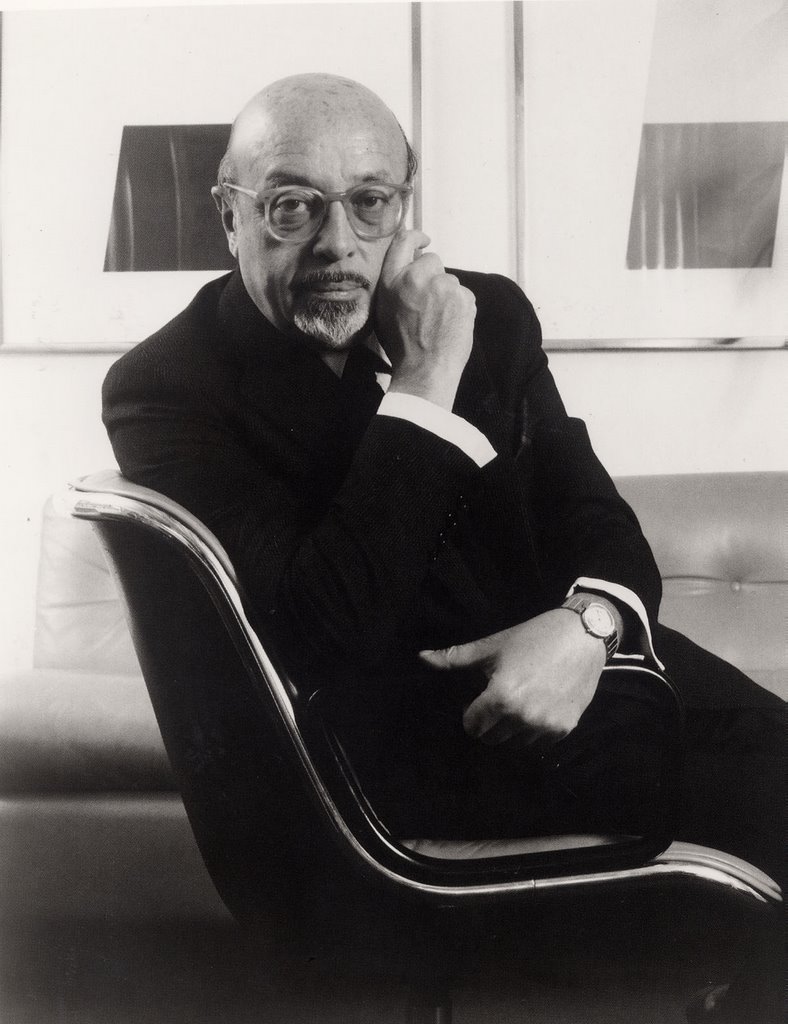
MusiQuote: Ahmet Ertegun, (1923-2006)


"I'd be happy if people said that I did a little bit to raise the dignity and recognition of the greatness of African-American music."
--Atlantic Records co-founder Ahmet Ertegun, on his legacy.


Other stories about Ertegun:

Ahmet Ertegun Earned Aretha Franklin's Respect (All Things Considered, NPR): Ertegun helped discover and develop many artists, including Ray Charles, Led Zeppelin and Sonny and Cher.

The Amazing Ears of the Late Ahmet Ertegun (Morning Edition, NPR): "Ertegun, who died Wednesday at 83, had some of the best ears in the business."

Music pioneer Ahmet Ertegun dies at 83 (Associated Press): "Ertegun remained connected to the music scene until his last days — it was at an Oct. 29 concert by the Rolling Stones at the Beacon Theatre in New York where Ertegun fell, suffered a head injury and was hospitalized. He later slipped into a coma. "(Also includes a slideshow)

Rock & Roll Founding Father Ahmet Ertegun Dies at 83 (Rolling Stone): "Ertegun helped usher in the transition from rhythm and blues to rock & roll, signing Ray Charles and the Drifters to Atlantic and producing Big Joe Turner's original version of 'Shake, Rattle and Roll.'"

Ahmet Ertegun, Music Executive, Dies at 83 (New York Times): "By the 1950s, Atlantic developed a unique sound, best described as the mixed and polygamous marriage of Mr. Ertegun’s musical loves. He and his producers mingled blues and jazz with the mambo of New Orleans, the urban blues of Chicago, the swing of Kansas City and the sophisticated rhythms and arrangements of New York. "

A Mogul Who Helped Mold Pop Culture (New York Times): "Part of what Mr. Ertegun also heard in his cherished singers was the sound of the gospel church. Mr. Charles merged the beat and the call-and-response of sanctified church music with considerably more secular implications in songs like “What’d I Say.” Mr. Ertegun, who was born a Muslim, worked with church-rooted African-American musicians and Jewish producers, notably Jerry Wexler, on many Atlantic hits; that interfaith coalition helped forge soul music. "

Also:

A Pioneer. A Gentleman. And a True Original. Atlantic Records' tribute site includes photos, bios, quotes and a recording of Ertegun singing an early version of "Mess Around."

Rolling Stone and Rhapsody have compiled a mixtape of several Ertegun-related hits.

The Gospel Ghost (because if you read this blog, you know there's always one if you look hard enough): Although I'm interested in Ertegun's life/career because of my interest in African-American music history (aural fusions between gospel music/R&B/jazz/blues, etc.), I'm really intrigued by something I read: That Ertegun co-founded a gospel label, Jubilee, in 1946. Oh. My. Goodness. Anybody in the blogosphere know about this? I'm going to ask Friends-of-the-blog Bob Marovich and Bil Carpenter. I'll let you know what I find.